
Farmers are on the frontlines of climate change

Farmers across North America face rapidly changing weather patterns from climate change that make it harder for them to grow crops and raise livestock. Shifting seasonal temperatures and rainfall, along with more frequent and extreme weather events, are driving production losses and increasing financial strain on farming operations.

Building resilience to increasingly unpredictable weather will require significant financial investments with support from agricultural finance institutions, farmers’ key financial partners. By conducting regional climate risk assessments, lenders can assess the financial risks producers face from a changing climate and contribute solutions to help farmers invest in adaptation measures.
A data-driven tool to assess climate and credit risk

This web tool models the financial and credit risk impacts of climate change on farms across the U.S. states of Nebraska, Iowa and South Dakota and the Canadian provinces of Alberta and Saskatchewan. It projects changes in weather conditions and the associated impacts on crop yields and farm financial outcomes from 2020 through mid-century.

Four major North American agricultural finance institutions, including Farm Credit Canada and three U.S. lenders, collaborated with EDF to develop this tool. Together, the institutions’ portfolios represent $230 billion in agriculture lending. The tool will assist agricultural lenders in the region to better understand climate risks to their portfolios and ways to support their customers in adapting to climate change.

How agricultural lenders can use this tool

First, select the weather tab above to see projected weather changes from 2020-2050 at the region, county and census division level. Then move to the crop yield tab to explore how these changes will affect projected yields over time for six key crops in the U.S. and Canada.

Next, navigate to the profit and credit risk tab to examine the impact of changing weather on model farms’ financial performance and credit risk. You’ll also have the option to create a custom farm scenario, selecting the county, farm size, crop rotation and level of credit risk.

Finally, visit the next steps tab for resources to assess and manage climate risks for your lending institution. In this tab, you’ll also be able to download the full dataset behind this tool to integrate into existing risk assessment processes.

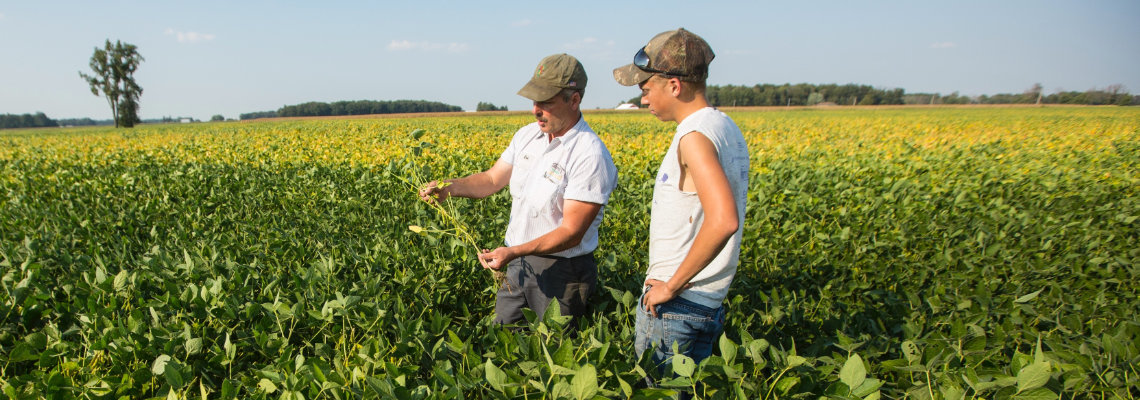
Photo by John Rae

Disclosure: This information is provided for general information purposes only, and is solely intended to educate readers about climate risks to agricultural lending. The content, analysis and data provided is obtained from sources believed to be reliable, but are not independently investigated or verified. Nothing about this information is or should be understood to constitute investment advice, be an endorsement of any financial advice or product, or create any fiduciary relationship. Any use of this information is at your own risk. Before making any financial decisions or investments, you should consult a financial advisor.